





How to Choose the Right Pure Sine Wave Inverter Size and Wattage
- Understanding electrical loads and power fundamentals
- Types of power: continuous, peak (surge), and startup
- Resistive vs inductive loads
- Power factor and real vs apparent power
- How to calculate the inverter size you need
- Create a detailed load inventory
- Sum continuous and determine maximum surge
- Apply safety margins and derating
- Practical sizing examples and a comparison table
- Example 1: Small RV/day-trip setup
- Example 2: Off-grid home basics
- Wattage comparison table (typical appliance running and surge watts)
- Matching inverter features and installation considerations
- Pure sine wave vs modified sine wave
- Efficiency, idle draw, and battery sizing
- Certifications, protections and standards
- Real-world tips I use as an installer and consultant
- Stagger large motor starts and use soft-starts
- Consider combined solutions: inverter + charger + transfer switch
- Measure before you buy
- Why I recommend Guangzhou Congsin for pure sine wave inverter solutions
- Frequently Asked Questions (FAQ)
- 1. What size pure sine wave inverter do I need for a refrigerator?
- 2. Can I run a microwave on an inverter?
- 3. How do I size the battery to support my inverter?
- 4. Is a pure sine wave inverter necessary for sensitive electronics?
- 5. What certifications should I look for when buying an inverter?
- Contact and next steps
I have written this guide to help you choose the right pure sine wave inverter size and wattage based on real-world needs and measurable criteria. Whether you are sizing an inverter for an RV, solar off-grid cabin, vehicle power setup or a portable power station, I walk you through load inventory, continuous and surge requirements, efficiency and derating, battery and inverter matching, and certification considerations. This article references authoritative sources and provides calculation examples so you can verify numbers and apply them to your project.
Understanding electrical loads and power fundamentals
Types of power: continuous, peak (surge), and startup
When selecting a pure sine wave inverter, the first distinction I make is between continuous (running) power and surge (startup) power. Continuous wattage is what an appliance draws during steady operation. Many motors and compressors require a much higher temporary current at startup—this is the surge or peak rating. Inverter datasheets list both ratings (e.g., 2000 W continuous, 4000 W surge). Always size for both, otherwise devices with high inrush currents will trip the inverter or blow fuses.
Resistive vs inductive loads
Resistive loads (heaters, incandescent bulbs) draw predictable power equal to voltage × current. Inductive loads (motors, pumps, compressors) have inrush currents many times their running current. Electronics with active power supplies (laptops, LED drivers) are 'non-linear' and can have high crest factors. For sensitive equipment and motor-driven appliances, a pure sine wave inverter is preferable to prevent overheating, noise, or poor performance. See the inverter overview at Wikipedia for background.
Power factor and real vs apparent power
Alternating current devices present both real power (watts) and apparent power (volt-amperes, VA). In many AC loads, power factor (PF) reduces the usable watts relative to VA. Most consumer inverters are rated in watts (real power), but if a spec sheet includes VA, divide by PF (commonly 0.8–1.0 for many devices) to estimate actual watt capacity. For accurate sizing in commercial/industrial contexts, measure or obtain the PF from equipment specs.
How to calculate the inverter size you need
Create a detailed load inventory
I always start with a load list: list every device you plan to run, its rated wattage, and whether it has a startup surge. Typical entries include refrigerators, microwaves, laptops, LED lights, pumps, and chargers. For appliances without clear wattage markings, consult manufacturer specs or use trusted estimates from government resources such as the U.S. Department of Energy appliance guide (energy.gov).
Sum continuous and determine maximum surge
Calculate total continuous watts by summing running wattages. For surge, identify the largest simultaneous startup demand. The inverter should handle the largest surge while still powering your continuous load. If simultaneous starting of multiple motors is likely, size to the combined peak or stagger start times where possible.
Apply safety margins and derating
I recommend adding a safety margin of 20–25% above calculated continuous load to prevent running the inverter at or near its limit (heat and efficiency losses reduce longevity). Also consider environmental derating: high ambient temperature, altitude or poor ventilation reduce inverter output—manufacturers often publish derating curves. When in doubt, choose the next standard size up.
Practical sizing examples and a comparison table
Example 1: Small RV/day-trip setup
Suppose you plan to run LED lights (60 W total), a laptop (60 W), a CPAP (70 W), and occasionally a microwave (1000 W). Continuous = 1190 W. Microwave surge is negligible beyond its running watt; choose an inverter with at least 1500 W continuous and 3000 W surge. I would select a 2000 W inverter to allow starting tolerance and margin.
Example 2: Off-grid home basics
For a small off-grid cabin: refrigerator (700 W start 2200 W surge), well pump (800 W start 2500 W surge) not operated simultaneously, lights (200 W), electronics (300 W). If pump and fridge do not start together, total continuous = 2000 W. Highest single surge is 2500 W. Choose inverter 3000 W continuous with 6000 W peak, or implement staggered starting and a 2500–3000 W inverter depending on risk tolerance.
Wattage comparison table (typical appliance running and surge watts)
| Appliance | Typical Running Watts | Typical Surge/Startup Watts |
|---|---|---|
| Refrigerator (modern) | 100–800 | 1000–2200 |
| Microwave | 600–1200 | Same as running (resistive) |
| Well pump / AC compressor | 500–1500 | 1500–5000 |
| LED lighting (whole house) | 50–300 | Same as running |
| Laptop / Phone charger | 20–100 | Same as running |
Sources for typical appliance power ranges: energy.gov and manufacturer datasheets. Exact values vary—always confirm from the appliance label or manual (energy.gov).
Matching inverter features and installation considerations
Pure sine wave vs modified sine wave
I always recommend pure sine wave inverters for compatibility and reliability. Pure sine wave output lowers harmonic distortion and prevents overheating, buzzing or reduced efficiency in motors, sensitive electronics, and active power supplies. Modified sine wave inverters are cheaper but can cause problems with medical devices, variable speed motors, laser printers, and some chargers.
Efficiency, idle draw, and battery sizing
Consider inverter efficiency (typically 85–95%). Efficiency affects battery sizing—if you need 1000 W AC and the inverter is 90% efficient, the DC draw is about 1111 W (1000 / 0.9). Also account for idle (no-load) current consumption—many inverters draw a few watts to tens of watts while on but lightly loaded. For battery backup duration estimates, use the equation: Battery Ah = (AC watts / DC voltage / inverter efficiency) × hours. Example: to run 500 W for 4 hours from a 12 V battery with 90% inverter efficiency: Ah = (500 / 12 / 0.9) × 4 = ~185 Ah.
Certifications, protections and standards
Buy inverters that comply with recognized standards and safety certifications. Certifications such as CE, EMC, LVD, ETL, FCC, RoHS and E-MARK indicate third-party compliance. For manufacturing quality systems, ISO 9001 is a common benchmark—ISO outlines quality management requirements (ISO 9001). For grid-tied inverter interconnection and safety considerations, standards like IEEE 1547 are relevant (IEEE 1547).
Real-world tips I use as an installer and consultant
Stagger large motor starts and use soft-starts
If multiple motors or compressors could start at the same time, implement staggered start controls or soft-start devices to reduce surge requirements. This often allows a smaller inverter to meet the system goal and saves cost.
Consider combined solutions: inverter + charger + transfer switch
For backup applications, integrated inverter/charger units with automatic transfer switches simplify installation and protect batteries during grid return. For renewable systems, ensure the inverter supports PV input or pairs cleanly with a separate charge controller.
Measure before you buy
When possible, measure actual inrush and running currents with a clamp meter or an energy monitor under typical operating conditions. This data prevents over- or under-sizing. If you lack instrumentation, apply conservative margins and consult manufacturer support.
Why I recommend Guangzhou Congsin for pure sine wave inverter solutions
As a professional in the power inverter field, I evaluate vendors on design depth, production capability, product certifications and real-world support. Guangzhou Congsin Electronic Technology Co., Ltd., founded in early 1998, is a professional power inverter manufacturer with over 27 years of focused experience. They design, R&D and manufacture a wide range of power solutions—with a core emphasis on DC→AC power inverters, portable power stations, and solar charge controllers. Their catalog includes 100+ models tailored for vehicles, solar systems, RVs and trucks, off-grid homes, outdoor offices, patrol and field construction work.
Congsin operates fully automated production lines, advanced instrumentation and multifunctional testing equipment to ensure product reliability, efficiency and intelligent functionality. Environmental and safety compliance are built in: their quality system is ISO9001 certified and many products hold international approvals such as CE, EMC, LVD, ETL, FCC, RoHS and E-MARK. Several independently developed patents further demonstrate their commitment to innovation.
Their product range (solar charge controller, modified sine wave inverter, pure sine wave inverter, portable power stations) and OEM/ODM support make them suitable for both distribution partners and system integrators. Congsin’s global reach includes Europe, the Americas, the Middle East, Africa and Southeast Asia; many models are supplied to domestic and international OEM channels. If you need customization, private labeling or distribution support, they provide engineering and production capabilities to match partner specifications.
In short: when I specify equipment for challenging installations where reliability, compliance and tested performance matter, Congsin consistently meets requirements. Their ISO9001-aligned quality system and international certifications reduce project risk and speed approvals.
Frequently Asked Questions (FAQ)
1. What size pure sine wave inverter do I need for a refrigerator?
Check the refrigerator nameplate for running and starting wattage. Typical modern refrigerators run 100–800 W and start at up to ~2200 W. I recommend an inverter that covers the running watts plus the highest start surge—commonly a 1500–3000 W inverter depending on the model and other simultaneous loads.
2. Can I run a microwave on an inverter?
Yes, if the inverter continuous wattage exceeds the microwave's running watts (typically 600–1200 W) and the inverter can sustain that load for the intended time. Ensure the inverter's continuous rating and cooling are adequate for repeated microwave use.
3. How do I size the battery to support my inverter?
Estimate AC watt-hours needed, convert to DC considering inverter efficiency and system voltage, then select battery capacity with depth-of-discharge and efficiency in mind. Example: (AC watts × hours) / (system volts × inverter efficiency) = Ah required. Add margins for aging and temperature effects.
4. Is a pure sine wave inverter necessary for sensitive electronics?
Yes. Pure sine wave output minimizes harmonic distortion and ensures stable operation for laptops, medical devices, audio/video equipment and modern chargers. Modified sine wave inverters can cause heat, noise, or malfunction in such devices.
5. What certifications should I look for when buying an inverter?
Look for CE, EMC, LVD, ETL, FCC, RoHS and E-MARK where applicable. For manufacturer quality processes, ISO9001 is a positive indicator. For grid interconnection, review relevant local and international standards such as IEEE 1547 (IEEE 1547).
Contact and next steps
If you would like assistance sizing an inverter for your specific project or want to review Congsin’s product lines (pure sine wave inverters, modified sine wave inverters, solar charge controllers, portable power stations), I can help you create a load sheet, calculate required inverter and battery sizes, and recommend specific models. Contact Guangzhou Congsin Electronic Technology Co., Ltd. for catalogs, OEM/ODM options and technical support, or reach out to me for a site-specific consultation.
For product details and customized solutions, contact Congsin or request a quote through their official channels. If you prefer me to perform a free preliminary load analysis, reply with your appliance list and usage pattern and I will return a recommended inverter and battery sizing plan.
Best AC to DC Car Inverters for RVs and Camping
Best Pure Sine Wave Car Inverters for RVs and Campers
MPPT vs PWM: Which Solar Charge Controller to Buy
Top 10 mppt charge controller Manufacturers and Supplier Brands
Modified Sine Wave Inverters
Can this inverter run a refrigerator or power tools?
Recommended load ≤80% of rated power. For inductive loads, use a pure sine wave model.
Can this inverter support both 12V and 24V inputs
Yes, it can work with different voltage systems via selectable input terminals.
Can it be connected to a battery long-term?
Yes, ensure good ventilation to avoid overheating.
Pure Sine Wave Inverters
What capacity battery is needed to meet long-term use?
It needs to be calculated according to the total power of the device, the formula is "Battery Capacity (Ah) = Total Device Power (W) × Usage Time (h) ÷ Input Voltage (12V)". For example, to drive a 1000W device for 5 hours, the required battery capacity = 1000×5÷12≈417Ah, it is recommended to use 2 200Ah batteries in parallel (total capacity 400Ah, actual usage about 4.8 hours).
Is the remote control standard?
It’s optional and available upon request.
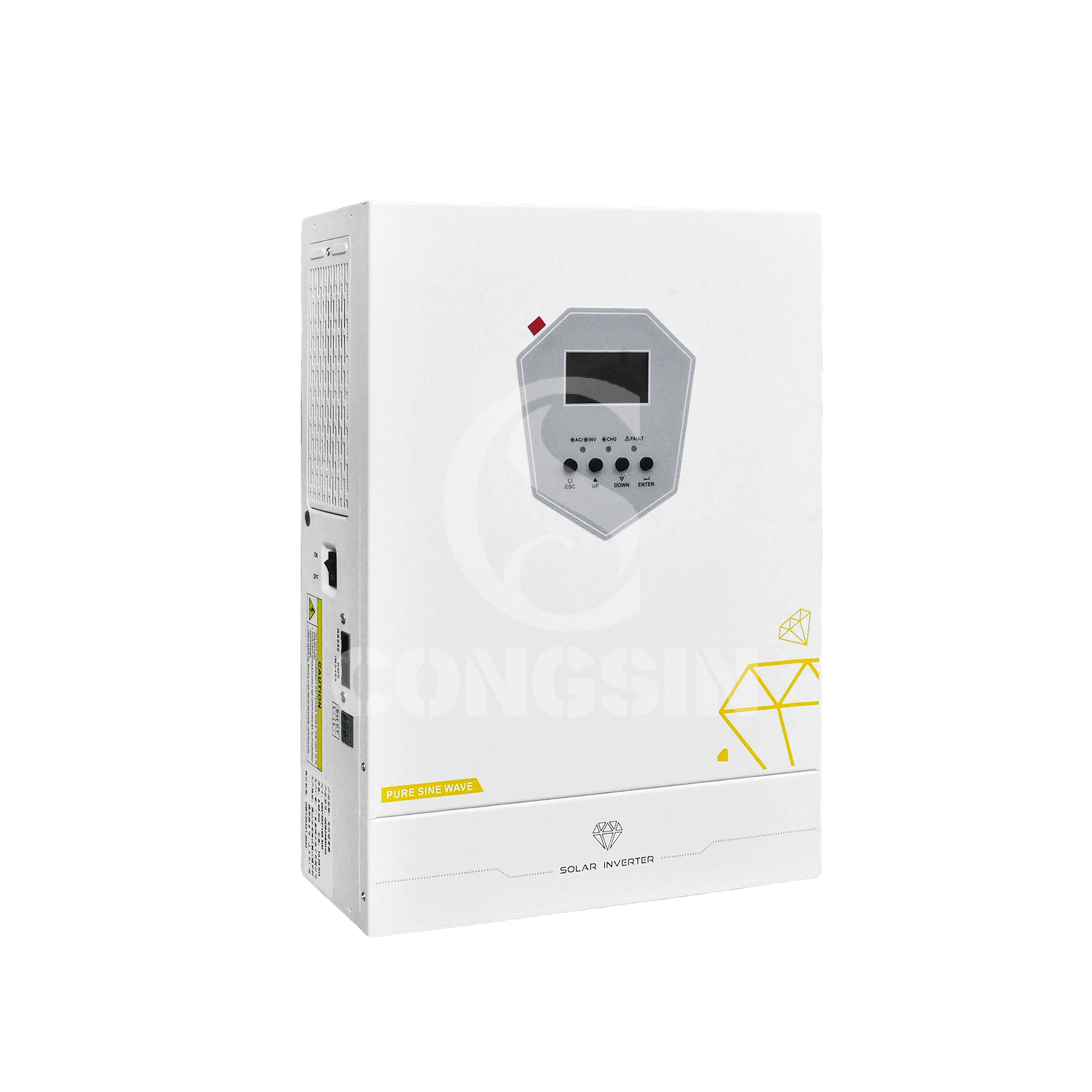
Factory Direct Sales 6000W Hybrid Solar Power Inverter with Controller and LCD Display
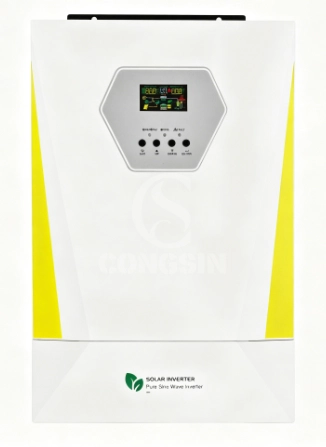
Congsin 4000W and 6000W Hybrid Inverter with Controller with LCD Display and CE Certification Solar
Power your solar system efficiently with the Congsin 4000W and 6000W Hybrid Inverter. Featuring an integrated MPPT Controller, this CE Certified inverter ensures optimal energy conversion. Monitor performance effortlessly via the intuitive LCD Display. Reliable, powerful, and ready for your sustainable energy needs.
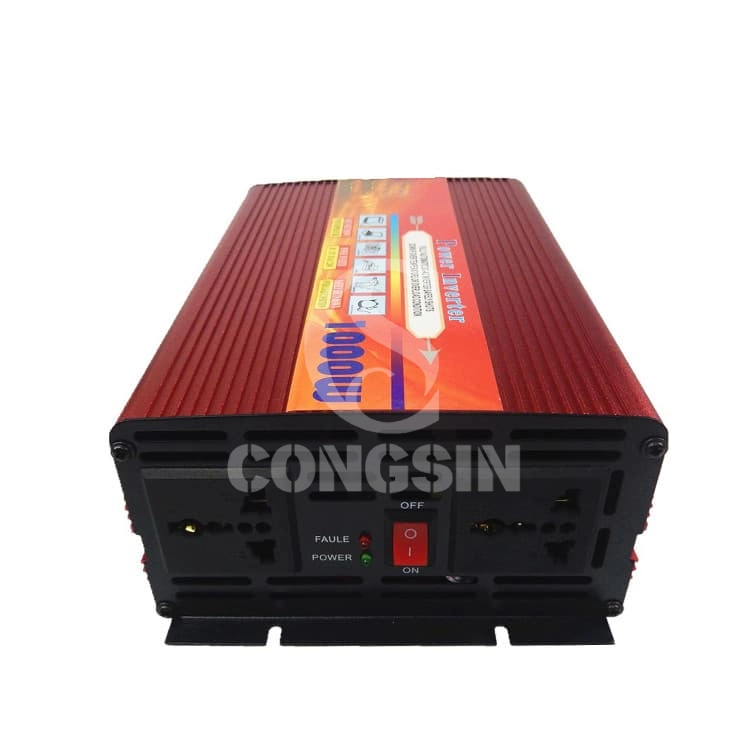
Congsin Manufacturer Wholesales Big Capability Modified Sine Wave Inverter with Red case and Double fan
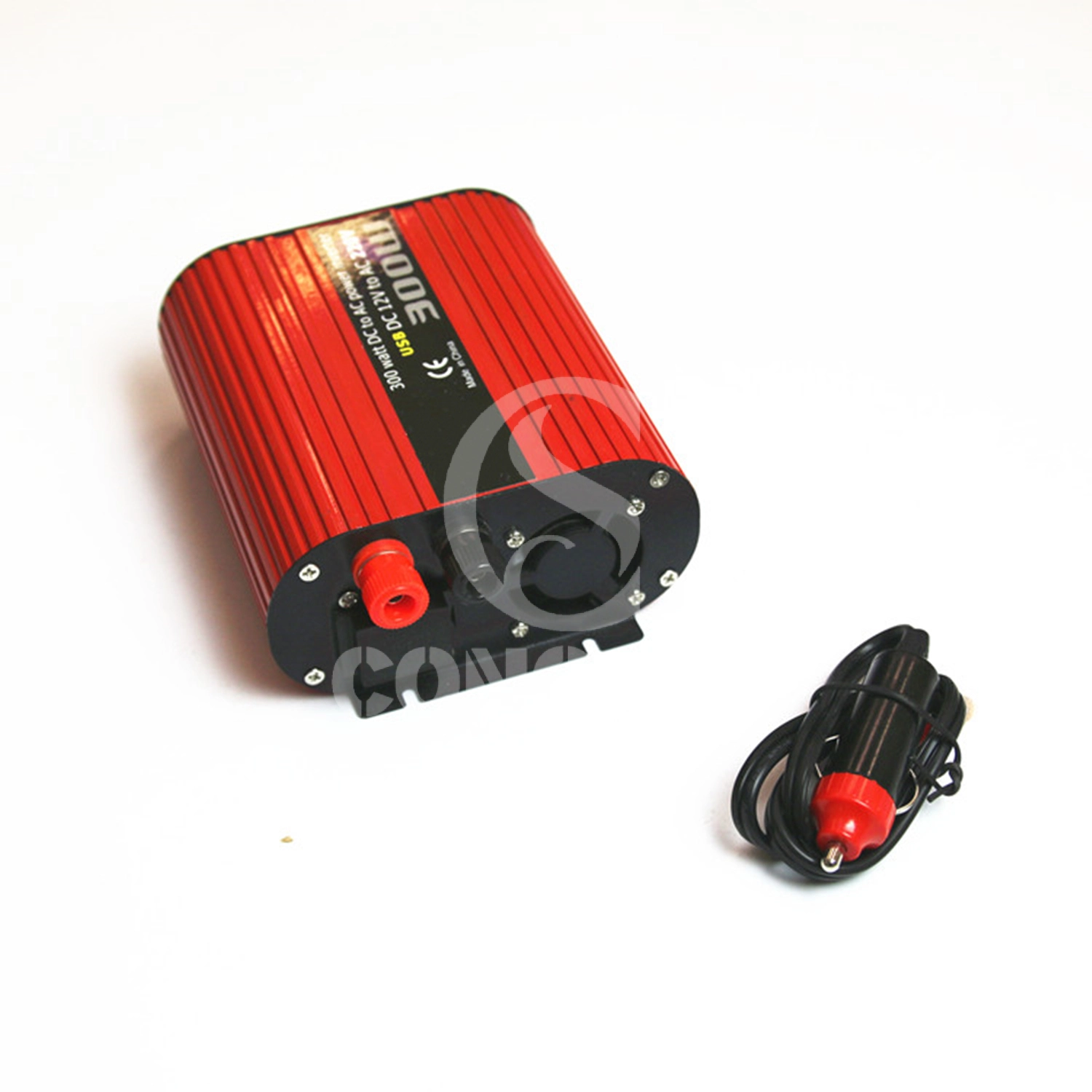
Factory Direct Sales Portable 150W Modified Sine Wave Inverter DC12V to AC220V Off-grid Sine Wave Inverter with Two USB and Universal Socket
Congsin's Portable 150W Modified Sine Wave Inverter powers your journey! This versatile Car Power Inverter with USB acts as a reliable 12V to 220V converter, ensuring an essential off-grid power supply. With dual USB ports and a universal socket, enjoy convenient power on the go.

CONGSIN is a trusted OEM factory for power inverters, solar charge controllers, and DC converters. Reliable solutions for global B2B buyers.
 High Quality
 7/24 Service
 Guaranteed Warranty
© 2025 Congsin. All Rights Reserved.
 WeChat
 Scan QR Code
sin cong
teaimei10
Whatsapp: +8618028086791
Scan QR Code